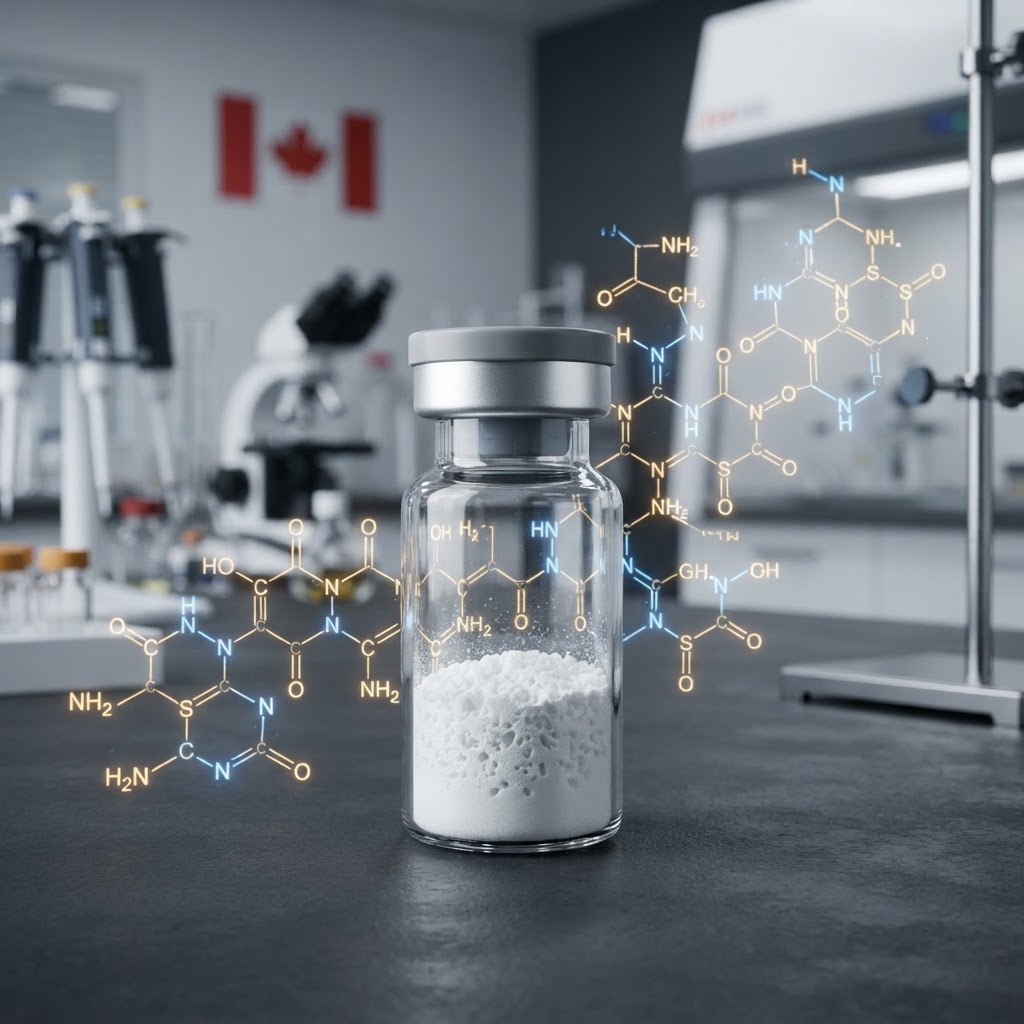
Understanding Tesamorelin in Laboratory Research
Tesamorelin is a synthetic, stabilized analogue of human growth hormone-releasing hormone (GHRH). In the context of tesamorelin Canada research, it is primarily utilized as a tool to investigate the GHRH-axis, somatotroph signaling, and metabolic endocrine models. Unlike native GHRH(1-44), which is rapidly degraded by the enzyme dipeptidyl peptidase-4 (DPP-IV), tesamorelin features a trans-3-hexenoyl modification at the N-terminus. This structural adjustment significantly enhances its stability, making it a preferred subject for in vitro studies focusing on sustained receptor activation and cAMP-dependent signaling pathways.
The Importance of Purity and Documentation
For researchers sourcing research peptides Canada, the integrity of the experimental data relies heavily on the quality of the material. High-purity tesamorelin (≥99%) is essential to ensure that observed effects are attributable to the peptide itself rather than impurities or degradation products. Reputable Canadian suppliers provide a Certificate of Analysis (COA) for every batch, which typically includes:
- HPLC-UV Purity Analysis: Verifying the chemical purity of the peptide.
- Mass Spectrometry (MS): Confirming the molecular weight and identity of the compound.
- Batch Traceability: Linking the specific vial to a verified production lot.
Researchers should prioritize suppliers who offer transparent documentation, as this is a cornerstone of reproducible peptide research. You can review our current standards and specifications on our tesamorelin research page.
Mechanism of Action in Research Models
Tesamorelin functions by binding to the GHRH receptor (GHRHR) located on the somatotroph cells of the anterior pituitary gland. This binding initiates a cascade that elevates intracellular cAMP levels, promoting the transcription and secretion of growth hormone. Because it retains the full 44-residue sequence of GHRH, it is often compared to shorter fragments like sermorelin or other GHRH analogues in comparative pharmacology studies. Researchers often utilize these models to study the dynamics of pulsatile hormone release and the feedback mechanisms governing the GH/IGF-1 axis.
| Feature | Tesamorelin | Native GHRH(1-44) |
|---|---|---|
| Stability | High (DPP-IV resistant) | Low (Rapidly degraded) |
| Structure | N-terminal trans-3-hexenoyl | Unmodified |
| Primary Research Use | GH-axis & metabolic models | Baseline physiological studies |
Sourcing and Regulatory Considerations in Canada
When sourcing research materials domestically, Canadian laboratories benefit from reduced transit times and the elimination of customs-related delays. However, it is critical to note that all such compounds are supplied strictly for in vitro laboratory research and are not intended for human consumption, veterinary use, or clinical applications. Health Canada maintains strict oversight regarding the sale and distribution of unauthorized drug products. Researchers must ensure their procurement processes align with institutional biosafety and ethics committee requirements. For those looking to integrate this compound into their studies, our tesamorelin product catalog provides detailed information on available research-grade vials.
Summary
Tesamorelin remains a vital component in modern endocrine research, offering a stable, reliable model for studying GHRH-receptor dynamics. By sourcing high-purity, COA-verified material from reputable Canadian suppliers, researchers can maintain the rigor and reproducibility required for high-impact scientific inquiry. Always ensure that your laboratory protocols are compliant with local regulations and that all materials are handled according to established safety guidelines.
Frequently Asked Questions
What is the primary research application for tesamorelin?
Tesamorelin is primarily used in laboratory settings to study the GHRH-axis, somatotroph signaling, and metabolic endocrine pathways, particularly those involving visceral adiposity and growth hormone regulation.
Why is tesamorelin considered more stable than native GHRH?
Tesamorelin contains a trans-3-hexenoyl group at the N-terminus, which protects the peptide from degradation by the enzyme dipeptidyl peptidase-4 (DPP-IV), allowing for a longer half-life in experimental models.
Are these peptides intended for human use?
No. All peptides supplied by Healthy Peps are strictly for in vitro laboratory research and are not intended for human consumption, clinical trials, or therapeutic use.
How can I verify the quality of my research peptide?
Quality should be verified through a batch-specific Certificate of Analysis (COA) provided by the supplier, which should include HPLC purity data and mass spectrometry results confirming the identity of the compound.
Is it legal to purchase research peptides in Canada?
Research peptides are sold as biochemical reference materials for laboratory use. It is the responsibility of the purchaser to ensure compliance with all applicable institutional and federal regulations regarding the handling and use of these materials.