Understanding NAD+ in Laboratory Research
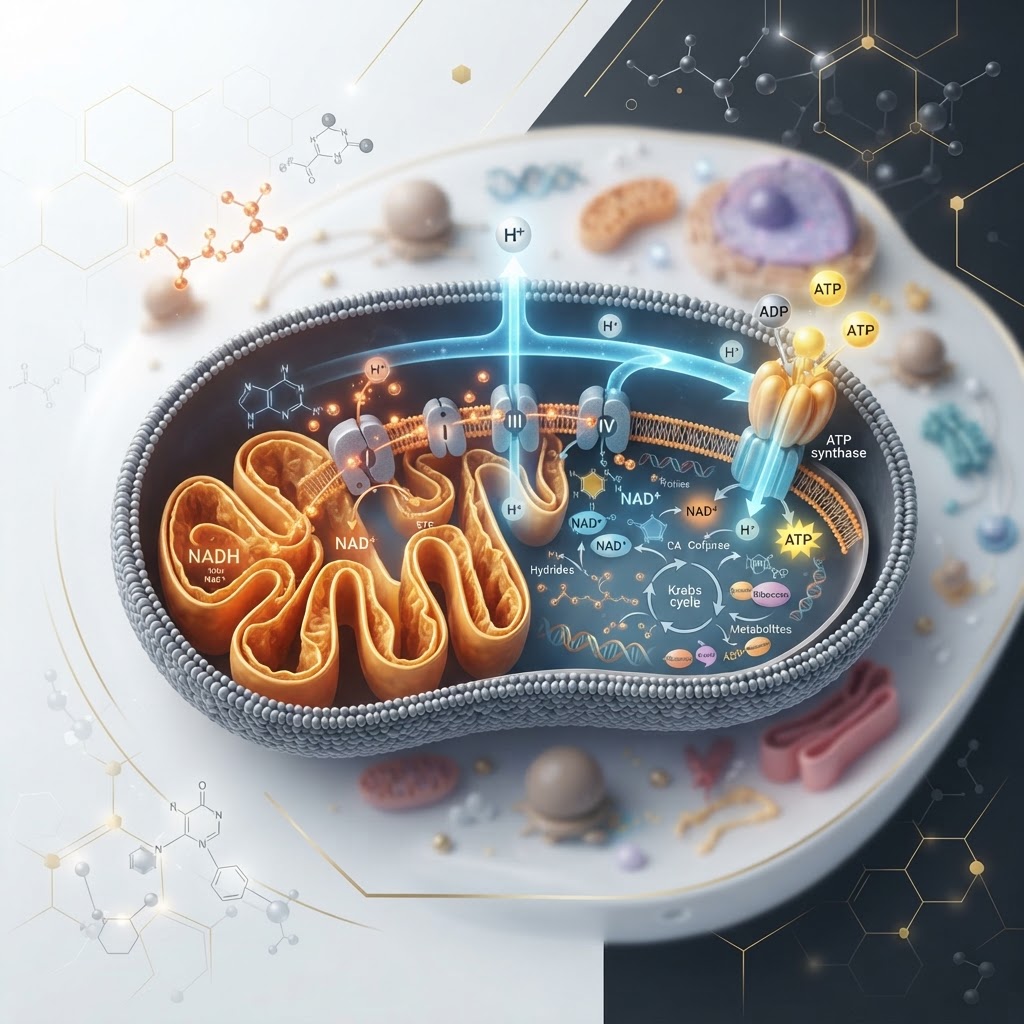
Nicotinamide adenine dinucleotide (NAD+) is a fundamental coenzyme found in all living cells. It serves as a critical electron carrier, cycling between its oxidized (NAD+) and reduced (NADH) forms to facilitate essential metabolic processes. In the context of peptide research and biochemical studies, NAD+ is a primary tool for investigating cellular energy metabolism, mitochondrial bioenergetics, and the regulation of NAD+-dependent enzymes.
At Healthy Peps, we provide high-purity NAD+ for researchers across Canada. Our commitment to quality ensures that every batch meets rigorous standards for laboratory-grade applications. Please note that all products are for in vitro laboratory research only and are not intended for human consumption.
The Biochemical Role of NAD+
The primary function of NAD+ is its role in redox signaling. By accepting electrons during metabolic reactions, it acts as a bridge between substrate oxidation and energy production. This dynamic interconversion is essential for maintaining the cellular redox state, which is a key indicator of metabolic health in in vitro assay systems.
NAD+ as a Substrate for Regulatory Enzymes
Beyond its role in energy metabolism, NAD+ is a required substrate for several critical enzyme families, including:
- Sirtuins (SIRT1–7): These NAD+-dependent deacetylases are studied for their role in epigenetic regulation, metabolic homeostasis, and stress response pathways.
- PARPs (Poly(ADP-ribose) polymerases): NAD+ serves as the ADP-ribose donor for PARP enzymes, which are central to DNA repair and genomic stability research.
- CD38: An enzyme that consumes NAD+ to regulate intracellular calcium signaling and metabolic flux.
Research Applications and Experimental Design
Researchers utilize NAD+ in a variety of controlled in vitro settings to characterize cellular pathways. Because NAD+ levels are known to fluctuate under conditions of oxidative stress and metabolic dysfunction, it is a frequent subject of study in aging biology and mitochondrial function investigations.
| Research Area | Focus of Investigation |
|---|---|
| Cellular Metabolism | NAD+/NADH ratio and metabolic flux analysis |
| Epigenetics | Sirtuin-mediated deacetylation activity |
| DNA Repair | PARP-dependent genomic stability assays |
| Mitochondrial Function | Electron transport chain efficiency |
Sourcing NAD+ for Canadian Research
When searching for nad plus for sale, it is essential to prioritize suppliers that provide transparent batch documentation and third-party verification. As a Canadian supplier, Healthy Peps understands the needs of domestic laboratories. We offer reliable shipping across Canada, ensuring that your research materials arrive in optimal condition.
Our NAD+ is supplied as a lyophilized powder, which is the industry standard for maintaining stability. Proper storage—typically at -20°C and protected from light and moisture—is critical to preserving the integrity of the compound for your experiments.
Quality Assurance and Compliance
We maintain strict compliance with laboratory standards. Every batch of our research-grade NAD+ undergoes HPLC testing to ensure ≥99% purity. We provide access to batch-specific documentation upon request, allowing researchers to maintain the highest level of reproducibility in their work. Remember, these compounds are strictly for laboratory research use and are not intended for therapeutic or clinical applications.
Summary
NAD+ remains a cornerstone of modern biochemical research. From its role as an electron carrier in the TCA cycle to its function as a substrate for sirtuins and PARPs, it provides invaluable insights into cellular regulation. For researchers looking for high-purity NAD+, Healthy Peps offers the quality and reliability required for sophisticated in vitro studies.
Frequently Asked Questions
Is NAD+ a peptide?
No. While NAD+ is often categorized alongside peptides in research catalogs due to its role in longevity and metabolic studies, it is chemically a dinucleotide coenzyme, not a chain of amino acids.
How should I store my NAD+?
NAD+ is hygroscopic and sensitive to light. It should be stored as a lyophilized powder at -20°C. Once reconstituted, it should be kept refrigerated at 2–8°C and used within the timeframe specified by your laboratory's protocols.
Are these products safe for human use?
No. All products supplied by Healthy Peps are for in vitro laboratory research use only. They are not intended for human or veterinary consumption, nor for any diagnostic or therapeutic use.
Do you provide certificates of analysis?
Yes. We prioritize transparency and provide HPLC-verified purity reports for our batches to ensure your research is conducted with high-quality, documented materials.