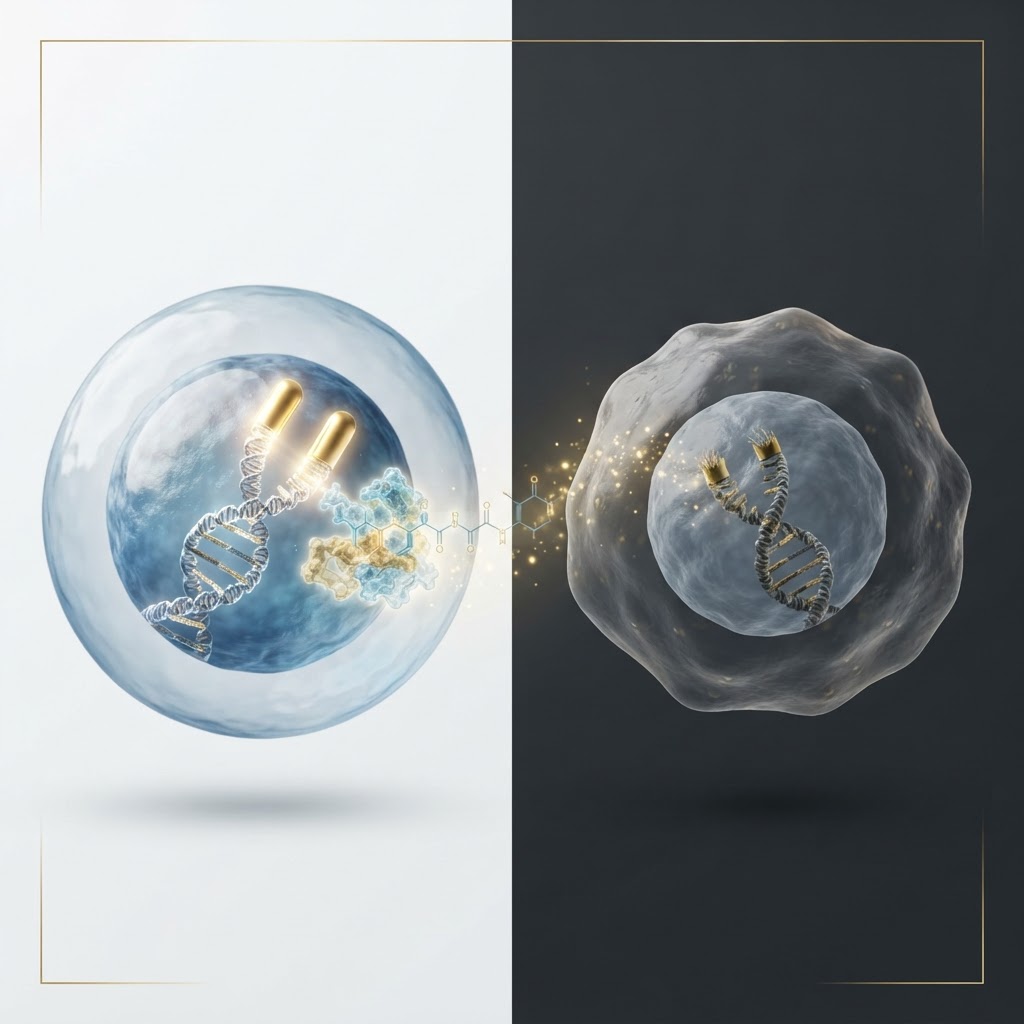
Understanding Epithalon in Laboratory Research
Epithalon, also known as Epitalon or by its sequence AEDG (Ala-Glu-Asp-Gly), is a synthetic tetrapeptide that has become a focal point in cellular-aging and gerontology studies. As a Canadian supplier of high-purity research materials, Healthy Peps recognizes the importance of providing researchers with reliable, batch-tested compounds for their peptide research. Epithalon is primarily investigated for its proposed role in telomerase activation and its potential influence on cellular replicative senescence.
It is essential to note that all products provided by Healthy Peps are for in vitro laboratory research only and are not intended for human consumption, veterinary use, or therapeutic application. Researchers must ensure their experimental designs adhere to local institutional guidelines and safety protocols.
The Mechanism of Action: A Research Perspective
The interest in Epithalon stems largely from preclinical studies, particularly those originating from the Khavinson laboratory. The primary hypothesis surrounding this tetrapeptide involves its interaction with telomerase, the enzyme responsible for maintaining telomere length at the ends of chromosomes. In various epithalon canada research models, investigators have observed that the peptide may induce the expression of the telomerase catalytic subunit (hTERT) in cultured human somatic cells.
Telomere Biology and Cellular Senescence
Telomeres act as protective caps on chromosomes, shortening with each cell division until a cell reaches the Hayflick limit and enters senescence. Research into Epithalon often focuses on whether the peptide can modulate this process in vitro. While early findings suggested potential telomerase reactivation, it is critical for researchers to approach these studies with a critical eye, as independent replication of these specific findings remains limited in the broader scientific literature.
Sourcing Research Peptides in Canada
For scientists conducting peptide research, the quality of the reagent is paramount. Healthy Peps provides high-purity Epithalon, ensuring that every batch undergoes rigorous third-party testing. When sourcing research peptides Canada-wide, researchers should prioritize suppliers that provide transparent documentation, including a Certificate of Analysis (COA) that verifies purity levels of ≥99%.
| Feature | Research-Grade Specification |
|---|---|
| Sequence | Ala-Glu-Asp-Gly (AEDG) |
| Purity | ≥99% (HPLC verified) |
| Form | Lyophilized powder |
| Storage | -20°C (long-term) |
| Regulatory Status | In vitro research use only |
Regulatory Context and Compliance
In Canada, the regulatory landscape for peptides is clear: these compounds are not authorized by Health Canada for human use. They are classified as research chemicals. It is the responsibility of the researcher to ensure that their laboratory environment is equipped to handle these materials safely and in compliance with all applicable laws. The label "For Research Use Only" is a standard industry designation that signifies the product has not been evaluated for safety, efficacy, or quality for human or animal consumption.
Best Practices for Laboratory Handling
Proper handling of Epithalon is vital to maintain the integrity of your research. As a lyophilized powder, the peptide is stable when stored correctly, but it is sensitive to moisture and temperature fluctuations. Researchers should utilize a sterile environment for reconstitution, typically using bacteriostatic water or a suitable buffer, and store the resulting solution at appropriate temperatures to prevent degradation.
Summary
Epithalon remains a significant subject of interest in the field of cellular-aging research. By focusing on high-purity, batch-tested materials, Canadian researchers can ensure their experiments are built on a foundation of reliable data. Healthy Peps is committed to supporting the scientific community by providing the necessary documentation and quality assurance required for rigorous epithalon canada research.
Frequently Asked Questions
Is Epithalon approved for human use in Canada?
No. Epithalon is not approved by Health Canada for human or veterinary use. It is strictly a research chemical intended for in vitro laboratory studies.
What does "Research Use Only" mean?
This designation indicates that the product has not been tested for safety or efficacy in humans and is not intended for clinical, diagnostic, or therapeutic applications.
How should I store my Epithalon peptide?
Lyophilized Epithalon should be stored in a cool, dry place, ideally at -20°C for long-term stability. Once reconstituted, it should be kept refrigerated and used within the timeframe recommended by your specific experimental protocol.
Does Healthy Peps provide a Certificate of Analysis?
Yes. We provide a batch-specific Certificate of Analysis (COA) for all our peptides to ensure transparency regarding purity and quality for your research needs.