Understanding Peptide Purity: What ≥99% Really Means for Research

A clear breakdown of how peptide purity is measured, what HPLC reports tell you, and why batch-to-batch consistency matters for reproducible research.

# Understanding Peptide Purity When researchers evaluate a peptide supplier, purity is usually the first number they look at. But what does '≥99% purity' actually mean, and how is it measured? ## How Purity Is Measured Purity is most commonly determined using **High-Performance Liquid Chromatography (HPLC)**. A sample is passed through a chromatographic column under high pressure, and the resulting chromatogram shows the relative concentration of each component. The area under the main peak — expressed as a percentage of the total — gives the purity value. A second method, **Mass Spectrometry (MS)**, confirms the molecular weight of the target peptide and helps identify truncation sequences or deletion variants that HPLC alone might miss. ## What a Certificate of Analysis Tells You A proper Certificate of Analysis (COA) should include: - HPLC chromatogram with purity percentage - MS confirmation of molecular weight - Amino acid sequence or lot-specific data - Net peptide content (the actual amount of peptide vs. counter-ions and water) - Storage and handling recommendations ## Why Batch Consistency Matters Even when purity is high, small variations in counter-ion content, residual solvents, or peptide content can affect solubility and downstream assays. For reproducible results, researchers should: 1. Record the lot number for every experiment 2. Reconstitute according to the supplier's instructions 3. Verify solubility before use 4. Store aliquots to avoid freeze-thaw cycles ## Conclusion Purity is a starting point, not a guarantee. Pairing a verified COA with consistent handling practices gives researchers the best foundation for reliable, reproducible work.

By Healthy Peps Research Team

Published on August 10, 2026

Tags: purity, HPLC, COA, quality

This article is provided for informational and educational purposes only. Products sold by Healthy Peps are intended strictly for laboratory research use only and are not intended for human consumption.

Back to all articles

Browse Research Peptides

Lab Results & COAs

Research Peptides Canada Guide
HomeBlogUnderstanding Peptide Purity: What ≥99% Really Means for Research
Research

Understanding Peptide Purity: What ≥99% Really Means for Research

A clear breakdown of how peptide purity is measured, what HPLC reports tell you, and why batch-to-batch consistency matters for reproducible research.

By Healthy Peps Research Team· August 10, 2026 6 min read
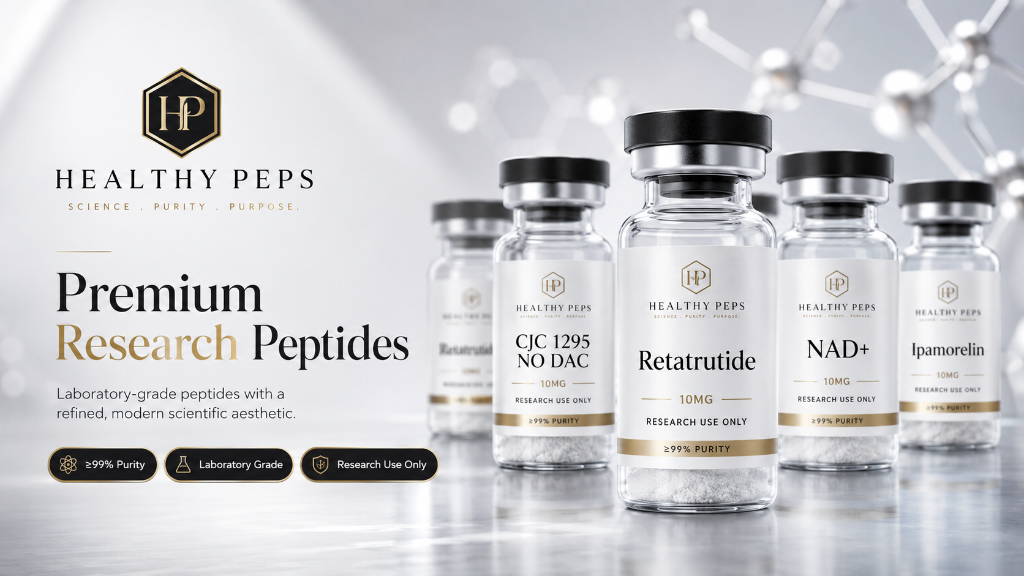
Understanding Peptide Purity: What ≥99% Really Means for Research — article cover
# Understanding Peptide Purity When researchers evaluate a peptide supplier, purity is usually the first number they look at. But what does '≥99% purity' actually mean, and how is it measured? ## How Purity Is Measured Purity is most commonly determined using **High-Performance Liquid Chromatography (HPLC)**. A sample is passed through a chromatographic column under high pressure, and the resulting chromatogram shows the relative concentration of each component. The area under the main peak — expressed as a percentage of the total — gives the purity value. A second method, **Mass Spectrometry (MS)**, confirms the molecular weight of the target peptide and helps identify truncation sequences or deletion variants that HPLC alone might miss. ## What a Certificate of Analysis Tells You A proper Certificate of Analysis (COA) should include: - HPLC chromatogram with purity percentage - MS confirmation of molecular weight - Amino acid sequence or lot-specific data - Net peptide content (the actual amount of peptide vs. counter-ions and water) - Storage and handling recommendations ## Why Batch Consistency Matters Even when purity is high, small variations in counter-ion content, residual solvents, or peptide content can affect solubility and downstream assays. For reproducible results, researchers should: 1. Record the lot number for every experiment 2. Reconstitute according to the supplier's instructions 3. Verify solubility before use 4. Store aliquots to avoid freeze-thaw cycles ## Conclusion Purity is a starting point, not a guarantee. Pairing a verified COA with consistent handling practices gives researchers the best foundation for reliable, reproducible work.
#purity#HPLC#COA#quality

This article is provided for informational and educational purposes only. Products sold by Healthy Peps are intended strictly for laboratory research use only and are not intended for human consumption.