Understanding Retatrutide in Laboratory Research
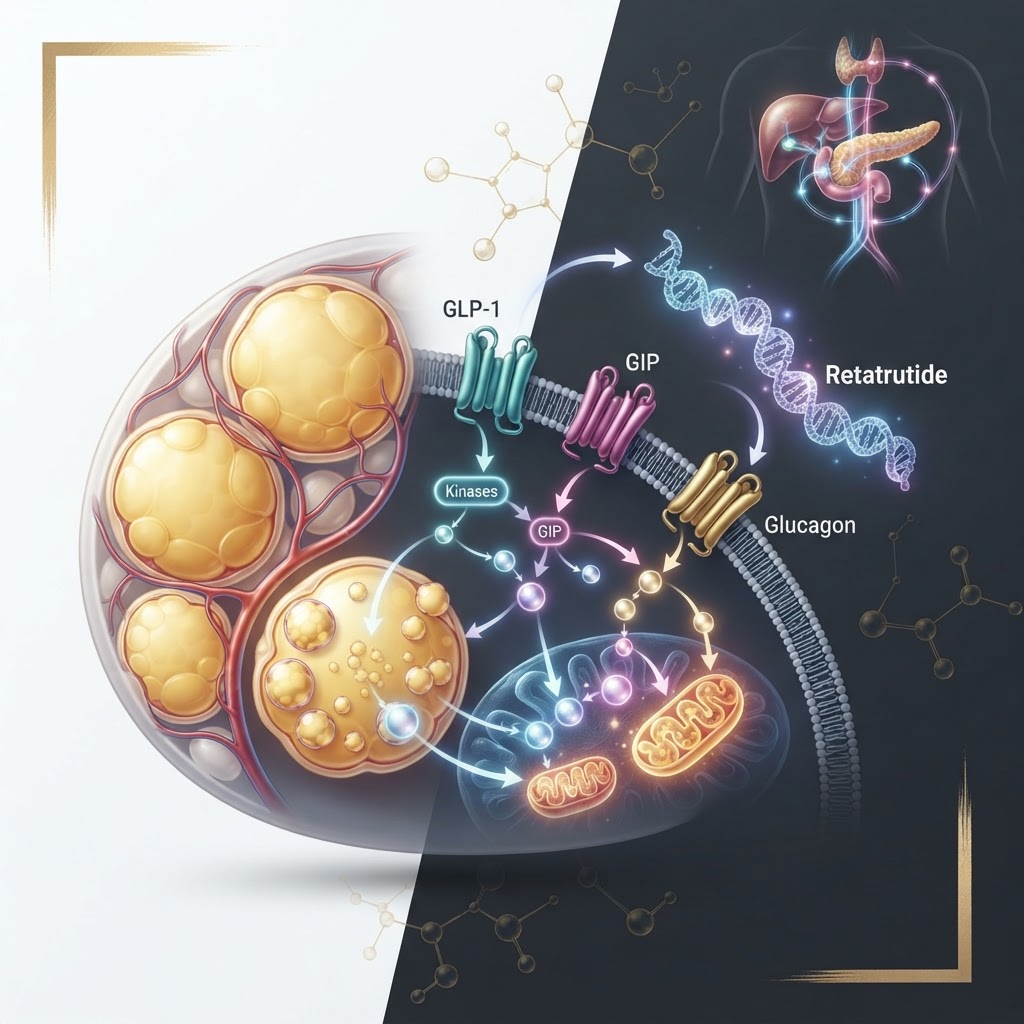
Retatrutide, often identified in scientific literature as LY3437943, represents a significant advancement in the study of incretin-based pharmacology. As a triple agonist, it is engineered to simultaneously target the glucose-dependent insulinotropic polypeptide (GIP) receptor, the glucagon-like peptide-1 (GLP-1) receptor, and the glucagon receptor. For researchers in Canada, accessing high-purity research peptides is essential for maintaining the integrity of in vitro studies and metabolic assays.
It is critical to note that all products supplied by Healthy Peps are intended strictly for in vitro laboratory research only. These compounds are not intended for human or veterinary consumption, nor are they approved by Health Canada for any clinical or therapeutic application.
The Triple-Agonist Mechanism
The primary interest in Retatrutide within the scientific community stems from its unique structural design. Unlike earlier incretin analogs that act on one or two receptors, Retatrutide's 39-amino acid sequence is optimized to provide balanced activation across three distinct pathways. This multi-receptor engagement is a focal point in current peptide research, particularly in studies investigating energy homeostasis and metabolic regulation in non-clinical models.
- GLP-1 Receptor: Traditionally associated with glucose-dependent insulin secretion and satiety signaling.
- GIP Receptor: Known to modulate lipid metabolism and enhance the effects of GLP-1.
- Glucagon Receptor: Involved in the regulation of hepatic glucose production and energy expenditure.
Evaluating Retatrutide 20mg Canada Price and Quality
When sourcing research materials, laboratories must prioritize analytical transparency over marketing claims. The retatrutide 20mg canada price can vary significantly depending on the supplier's commitment to quality control and domestic logistics. Researchers should look for suppliers that provide batch-specific Certificates of Analysis (COA) verified by independent third-party laboratories using HPLC (High-Performance Liquid Chromatography) and Mass Spectrometry.
| Feature | Research-Grade Standard |
|---|---|
| Purity Specification | ≥99% (HPLC) |
| Documentation | Batch-specific COA required |
| Shipping | Domestic Canadian dispatch |
| Storage | Lyophilized, -20°C recommended |
Domestic Sourcing and Batch Documentation
For Canadian research facilities, domestic sourcing offers distinct advantages, including reduced transit times and the elimination of cross-border customs complexities. Reliable suppliers provide documentation that links a specific batch number on the vial label to a corresponding COA. This traceability is a hallmark of professional peptide supply chains and ensures that the material used in experiments meets the required purity thresholds.
Best Practices for Handling and Storage
To maintain the stability of lyophilized Retatrutide, proper handling protocols must be strictly followed. Once reconstituted, peptides are susceptible to degradation. Researchers should avoid repeated freeze-thaw cycles by dividing the solution into single-use aliquots and storing them at appropriate temperatures. Always consult the specific product documentation provided with your batch for recommended reconstitution buffers and stability data.
Summary
Retatrutide remains a subject of intense interest in metabolic research due to its triple-agonist profile. Canadian laboratories seeking to procure this compound should prioritize suppliers that offer batch-tested, high-purity material with transparent documentation. By adhering to rigorous laboratory standards and sourcing from reputable domestic providers, researchers can ensure the consistency and reliability of their experimental data.
Frequently Asked Questions
What is the current status of Retatrutide in Canada?
Retatrutide is an investigational compound currently in clinical trials. It is not an approved medicine in Canada and is not authorized by Health Canada for human or veterinary use.
Why is batch-specific documentation important?
Batch-specific COAs provide independent verification of purity and identity. This ensures that the material used in your research matches the specifications required for accurate and reproducible results.
How should Retatrutide be stored?
Lyophilized Retatrutide should be stored in a cool, dry environment, typically at -20°C or lower for long-term stability. Once reconstituted, it should be handled according to the specific guidelines provided by the manufacturer to prevent degradation.
Are there differences between 10mg, 20mg, and 30mg vials?
The primary difference is the quantity of the lyophilized peptide. Researchers should select the vial size that best fits their experimental design and volume requirements to minimize waste and ensure the freshness of the material.