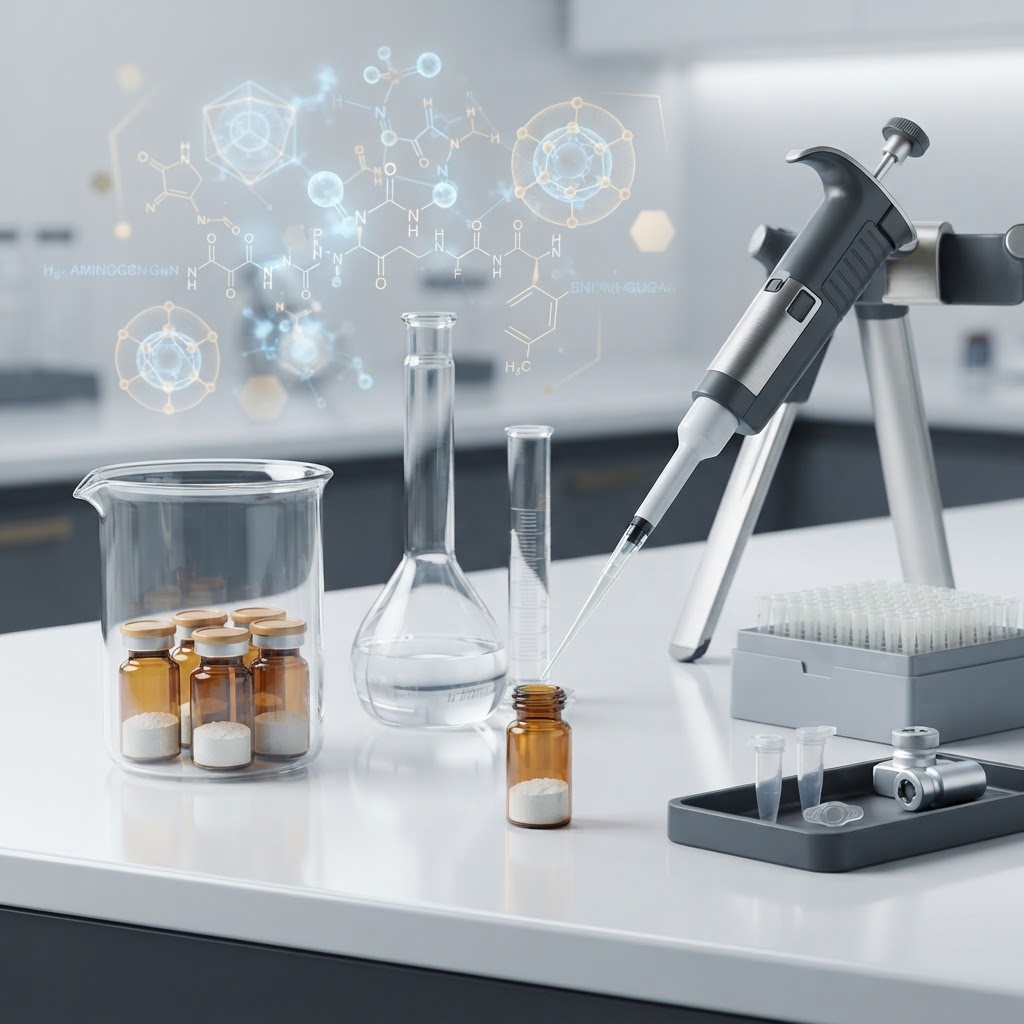
Understanding Peptide Reconstitution for Laboratory Precision
For researchers working with lyophilized (freeze-dried) compounds, the reconstitution process is a critical step in ensuring experimental accuracy. Whether you are studying BPC-157 or other specialized compounds, the transition from a stable powder to a liquid solution requires precise arithmetic and sterile technique. A peptide reconstitution calculator for researchers is an essential tool to minimize human error, ensuring that your concentration calculations remain consistent across every batch.
At Healthy Peps, we provide high-purity research peptides to the Canadian scientific community. Because our products are intended for in vitro laboratory research only and are not for human consumption, maintaining rigorous standards during the dilution process is paramount to your study's integrity.
The Fundamentals of Reconstitution Math
Reconstitution is the process of dissolving a known mass of lyophilized peptide into a specific volume of diluent, typically bacteriostatic water. The goal is to achieve a target concentration (mg/mL) that allows for accurate measurement during your experimental procedures.
The Core Formula
The basic formula for calculating concentration is straightforward:
Concentration (mg/mL) = Total Peptide Mass (mg) / Total Diluent Volume (mL)
For example, if you have a 5 mg vial and add 2 mL of bacteriostatic water, your concentration is 2.5 mg/mL. When you need to extract a specific dose, you divide your target dose by the concentration to find the required volume in milliliters.
| Vial Size (mg) | Diluent Volume (mL) | Resulting Concentration (mg/mL) |
|---|---|---|
| 5 mg | 1.0 mL | 5.0 mg/mL |
| 5 mg | 2.0 mL | 2.5 mg/mL |
| 10 mg | 2.0 mL | 5.0 mg/mL |
| 10 mg | 5.0 mL | 2.0 mg/mL |
Step-by-Step Laboratory Handling
Precision starts before the calculator is even opened. Follow these best practices to maintain the stability of your research materials:
- Equilibration: Allow your lyophilized vial to reach room temperature for 20–30 minutes before opening. This prevents condensation from forming on the powder, which can degrade the peptide.
- Sterile Technique: Always swab the rubber stopper of both the peptide vial and the diluent vial with a fresh alcohol wipe.
- Gentle Addition: Never spray the diluent directly onto the lyophilized cake. Angle the needle and allow the liquid to run slowly down the inside wall of the glass vial.
- Mixing: Gently swirl the vial to dissolve the contents. Avoid vigorous shaking, as mechanical stress can denature sensitive peptide chains.
Storage and Stability Considerations
Once a peptide is reconstituted, its stability profile changes significantly. While lyophilized peptides can often be stored at lower temperatures for extended periods, reconstituted solutions are more susceptible to degradation. Always store your solutions in a refrigerator (2–8°C) and keep them shielded from light. Label every vial clearly with the compound name, concentration, and the date of reconstitution to ensure your lab records remain audit-ready.
Why Canadian Researchers Choose Healthy Peps
As a Canadian supplier, Healthy Peps understands the unique needs of local laboratories. We provide batch-specific documentation and HPLC-verified purity of ≥99% for all our compounds. By utilizing our resources and tools, you ensure that your research is built on a foundation of high-quality materials and precise, reproducible data. Remember, all products are for in vitro laboratory research only and are not intended for human or animal use.
Summary
Mastering the use of a peptide reconstitution calculator is a fundamental skill for any researcher. By combining accurate concentration math with sterile handling techniques, you ensure the reliability of your experimental outcomes. Always verify your calculations, maintain a clean workspace, and adhere to proper storage protocols to protect the integrity of your research.